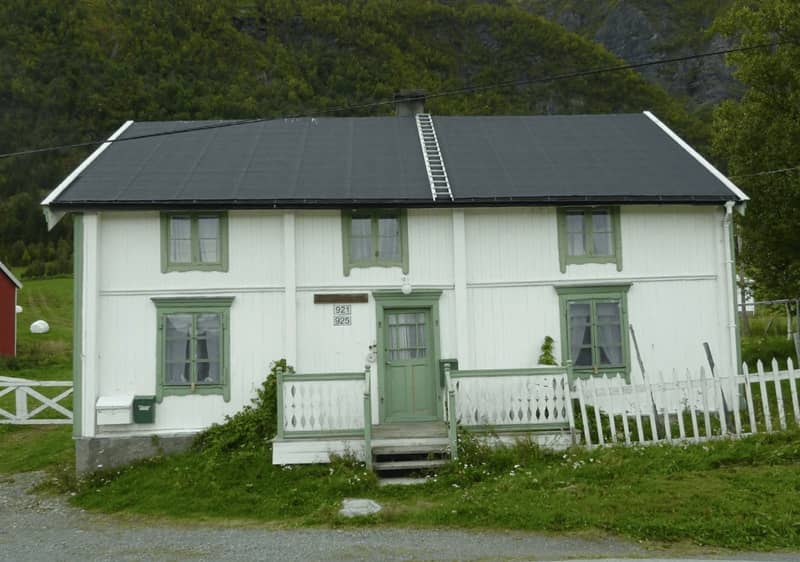
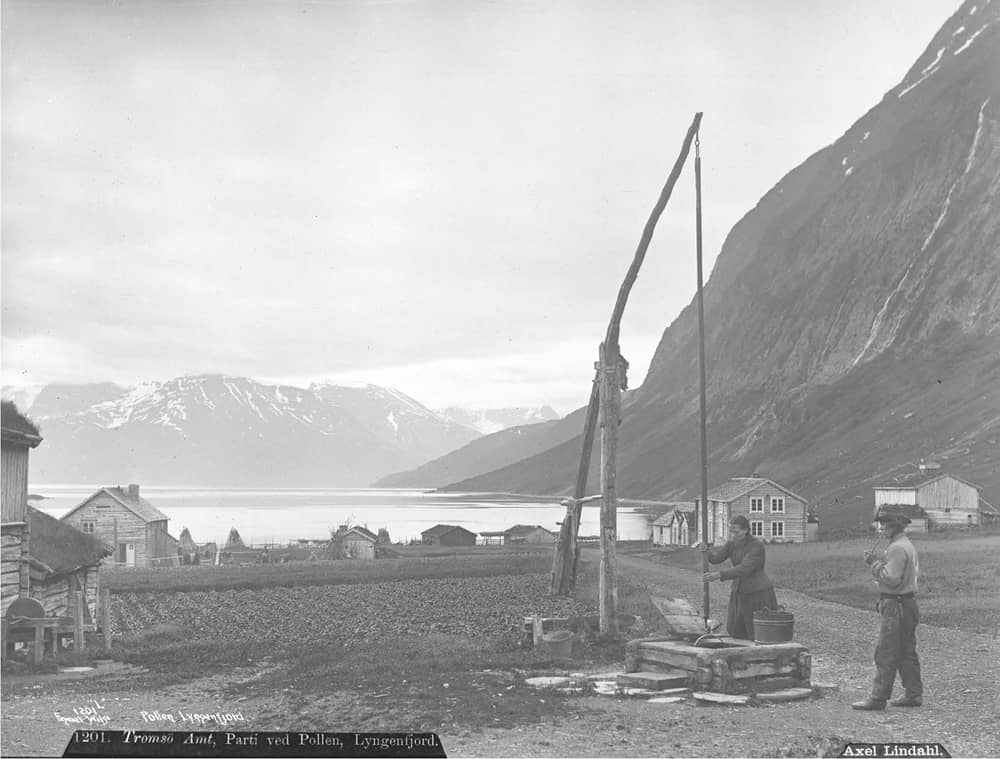
The National Heritage Board has approved the preservation of Nedrum farm in Lyngen municipality in Troms. The farm is a rare, well-preserved example of Kven settlement, with roots dating back to the 17th century. The main building, known as Nergaardhuset, contains parts of the building that probably date from before 1650.
The farm has been in continuous use for several hundred years and represents an important cultural environment where the Kvens, Sami and Norwegians have lived side by side. Both the buildings and the yard provide a comprehensive picture of the livelihood in North Troms, where farming and fishing have been combined.
The preservation includes several buildings and the entire courtyard, and will help to preserve the architecture, use of materials and cultural-historical values. The complex clearly shows how Kven building practices have developed and adapted to local conditions over time.
The farm has been in continuous use for around 300 years - which is unusual in northern Norway, where many buildings were lost during the conflagration at the end of World War II.
From the 1890s, the house served as a venue for public education, a role it retained until after the war, when Oksvik school was established. Later, the farm also played an important role as a voice station for telephone and telegraph from 1922 and through the evacuation in 1944, and partly also in the years after the war before telephones became common in private homes.
Nergaardhuset, which originally belonged to the Øvre Pollen estate, has been owned and used by the same family since at least 1753. The history of the farm is clearly marked by what is often referred to as the «meeting of three tribes», where Kven, Sami and Norwegian traditions meet. For generations, the family has been conscious of and proud of its Kven roots, which is also reflected in the buildings.
The house shows clear traces of the development over several hundred years, both in construction and details. There are few better-preserved examples of Kven building techniques than this one. Particularly characteristic are the windows, with sloping frames and internal glass panes between rooms - details that testify to both craft traditions and practical solutions adapted to life in the north.